
PHA Compliance Software: How the Right Platform Keeps Your Authority Audit-Ready
What is PHA compliance software?
PHA compliance software is a HUD-focused platform that helps a housing authority meet federal program requirements by building the rules for reporting, inspections, and income certification into everyday workflows. It validates data before it reaches HUD, tracks deadlines, and keeps an audit trail, so compliance becomes a steady process rather than a periodic scramble.
What compliance actually means for a PHA
For a public housing authority, compliance is not one task. It spans income certifications, tenant data submissions, physical inspections, program scoring, and the payments tied to all of them. Each one has its own rules, its own deadlines, and its own consequences for getting it wrong. Before you can judge software, it helps to name what a housing authority is actually held to. Compliance is a set of federal programs running at the same time, each with its own standard and reporting rhythm.
Form HUD-50058 and IMS/PIC. Every certification a PHA completes has to be submitted accurately to HUD through the Form 50058 module in IMS/PIC. Rejected or late records lower your reporting rate and draw attention.
NSPIRE inspections. NSPIRE is HUD's current physical inspection standard, focused on resident health and safety. Units and buildings have to be inspected, documented, and kept in passing condition year-round.
SEMAP. The Section 8 Management Assessment Program scores how well an authority runs its Housing Choice Voucher program across a set of federal performance indicators, and your SEMAP rating shapes whether HUD designates the agency a high performer, a standard performer, or troubled.
HOTMA income and assets. The HOTMA income and asset rules changed how PHAs calculate eligibility and rent, and applying them correctly at certification is now part of staying compliant.
Behind all of these sits income verification through EIV and the accuracy of the assistance payments that follow. Miss on any one and the others feel it. That interlocking quality is exactly why software, rather than manual tracking, is the practical answer.
How PHA compliance software keeps you audit-ready
The value of compliance software shows up most clearly at audit time, but the work that gets you there happens every day. Good software front-loads accuracy so problems surface early, while they are cheap to fix.
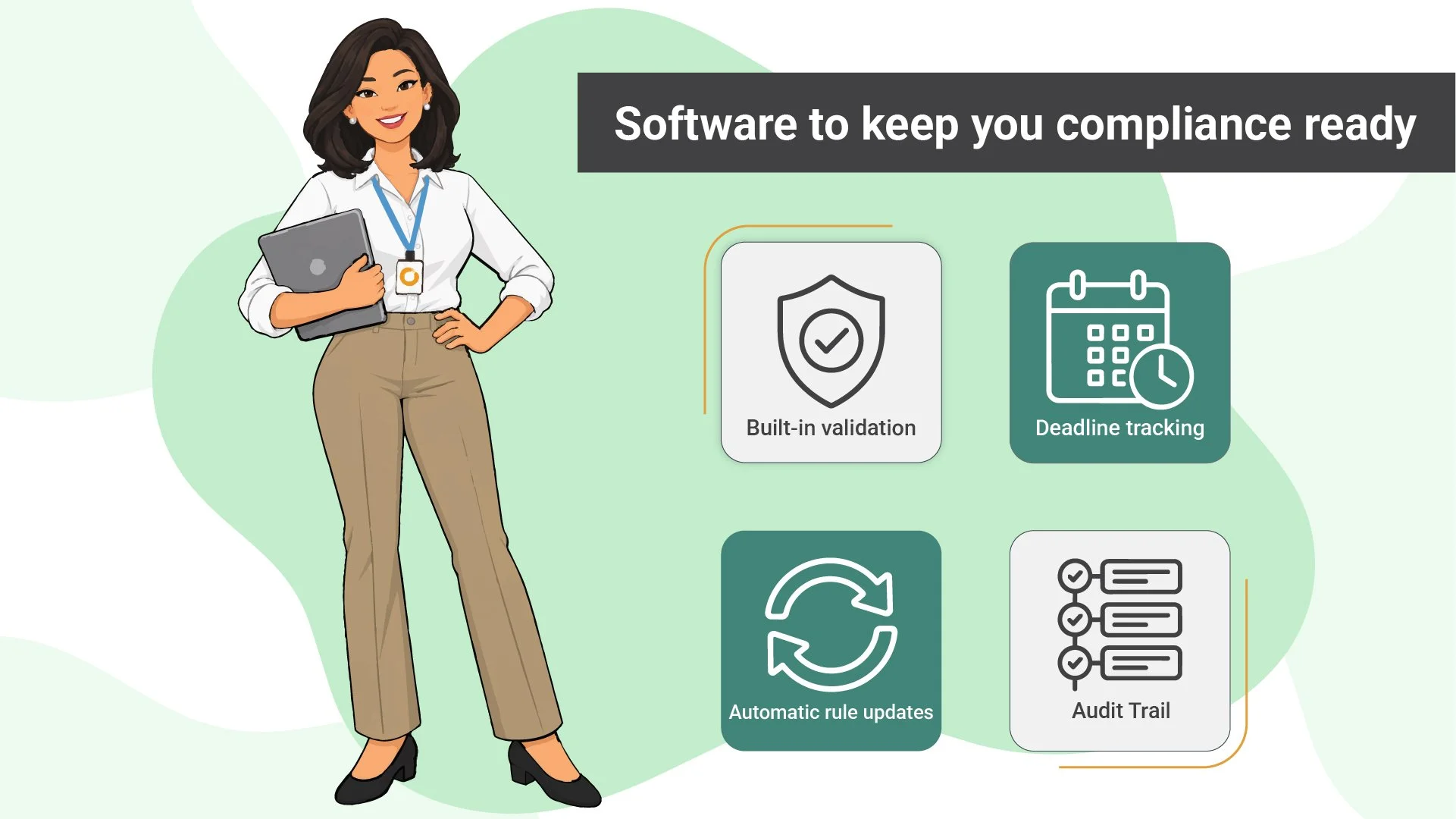
The first feature to look for is built-in validation. Strong software checks a 50058 record against HUD's rules before it is submitted, flagging the missing field or inconsistent figure at the desk rather than letting it come back as a rejection weeks later. The second is deadline and recertification tracking. Annual reexaminations, interim certifications, and inspection schedules are surfaced automatically, so nothing slips because one staffer was out or a spreadsheet fell out of date.
The third is automatic rule updates. When HUD revises a standard, such as the HOTMA phase-in or a NSPIRE change, the system reflects the current rule without an internal scramble to rebuild a template. The fourth is a complete audit trail. Every change is logged with who made it and when, so when an auditor or a HUD reviewer asks how a figure was reached, the answer is a few clicks away rather than a week of digging.
Taken together, these features change compliance from a periodic fire drill into a steady background process. Fewer findings, less reliance on any one person's memory, and a record you can stand behind. For the full category picture, see our complete guide to public housing authority software.
Purpose-built for HUD vs. generic property management software
This is the distinction that matters most when a PHA compares options, and it is easy to miss on a feature list. Generic property management software is built to track rent, units, and leases for conventional landlords. It can be genuinely good at that. What it does not understand is HUD. It has no concept of a 50058 submission, no NSPIRE inspection logic, no SEMAP indicators, and no HOTMA calculation rules. To use it for compliance, a housing authority has to bolt those requirements on by hand, in spreadsheets and side processes that live outside the software and break every time a rule changes.
Purpose-built PHA compliance software takes the opposite approach. The federal programs are encoded in the platform itself, so compliance is native rather than manual. The system already knows what a valid certification looks like, when an inspection is due, and how a HOTMA income calculation should run. Staff is guided by rules the software enforces, not left to remember them.
There is also a plain search-and-clarity reason to care about this distinction. “PHA software” can be confused with unrelated tools, and a platform built specifically for public and Indian housing programs signals, to buyers and to search engines alike, that it is the real thing. If a vendor cannot speak fluently about 50058, NSPIRE, SEMAP, and HOTMA, it was probably not built for a PHA. You can see what purpose-built looks like on Kanso's public and affordable housing platform.
Staying current as HUD rules change
Compliance is a moving target, and that is one of the hardest parts for a lean agency to manage on its own. HUD does not set the rules once and leave them. HOTMA has been phased in over multiple deadlines. NSPIRE replaced the older inspection model and continues to be refined. Voucher management reporting requirements keep evolving. Every one of these changes means the way a PHA calculates, documents, or submits something has to change with it, on HUD's timeline rather than the agency's.
When compliance rules live in spreadsheets and homegrown templates, staying current is manual labor. Someone has to read the notice, understand it, and rebuild the process, and any gap between the rule taking effect and the process catching up is exposure at audit time. This is where the delivery model matters as much as the features. A cloud-hosted compliance platform applies rule updates centrally, so every agency on it reflects the current requirement at once, with no upgrade project and no version left behind. That is a core reason housing authorities are moving off installed software, and we cover the tradeoffs in depth in our guide to cloud and SaaS public housing software.
Inspections are a good example of the overlap. NSPIRE compliance and day-to-day maintenance are two views of the same work, which is why compliance software and maintenance workflows are closely linked. Our public housing maintenance software guide looks at that operational side in more detail.
How to evaluate PHA compliance software
When you compare options, look past the word “compliance” on the marketing page and ask a short set of concrete questions. The answers separate software built for HUD programs from software that merely mentions them.
First, does it cover the full program set, not just one piece? A tool that handles 50058 submissions but ignores NSPIRE, SEMAP, or HOTMA leaves gaps you will have to fill manually. Second, are rule updates included and applied for you? Ask specifically how the vendor handled the most recent HOTMA and NSPIRE changes, and how quickly. Third, does the software validate data before submission, or only report failures after HUD rejects them? Catching an error at the desk is worth far more than learning about it later. Fourth, is there a complete, exportable audit trail? When a reviewer asks how a number was reached, you want a clear answer, not a reconstruction.
Two more questions are worth asking as you narrow the field: is the platform purpose-built for public housing rather than adapted from generic property management, and can your team reach it securely from any office or field location? For a full side-by-side of providers, pricing, and honest alternatives, see our buyer's guide to the best public housing authority software, or request a demo to see how Kanso handles your programs.
Frequently asked questions (FAQs)
-
PHA compliance software is a HUD-focused platform that helps a housing authority meet federal program requirements by building the rules for reporting, inspections, and income certification into everyday workflows. It validates data before it goes to HUD, tracks deadlines, applies current rules automatically, and keeps an audit trail, so compliance becomes a steady process rather than a periodic scramble.
-
The core set is Form HUD-50058 reporting through IMS/PIC, NSPIRE physical inspections, the SEMAP score for the Housing Choice Voucher program, and HOTMA income and asset rules, along with the income verification and assistance payments tied to them. Strong software covers all of these in one system rather than leaving gaps for staff to fill by hand.
-
No software can guarantee an outcome, and any vendor that promises one is overselling. What good compliance software does is materially lower your risk, by catching errors before submission, keeping you on current HUD rules, and documenting every step. Staff judgment still matters. The software makes that judgment easier to apply consistently and easier to prove later.
