
If your inspectors still walk units with an HQS inspection checklist, it is about to start giving you the wrong answer. Some units it passes will fail under NSPIRE-V. Some units it fails will now pass.
The Housing Choice Voucher (HCV), Project-Based Voucher (PBV), and Moderate Rehabilitation programs must move from Housing Quality Standards (HQS) to the National Standards for the Physical Inspection of Real Estate (NSPIRE) by February 1, 2027, as the US Department of Housing and Urban Development (HUD) confirms in Notice PIH 2026-18. HUD encourages public housing agencies (PHAs) to switch sooner. Whatever date you choose, your inspectors and your HUD compliance software need to work from the same rules. Here is what flips, what stays the same, and what to finish before February.
Why your old checklist misleads you
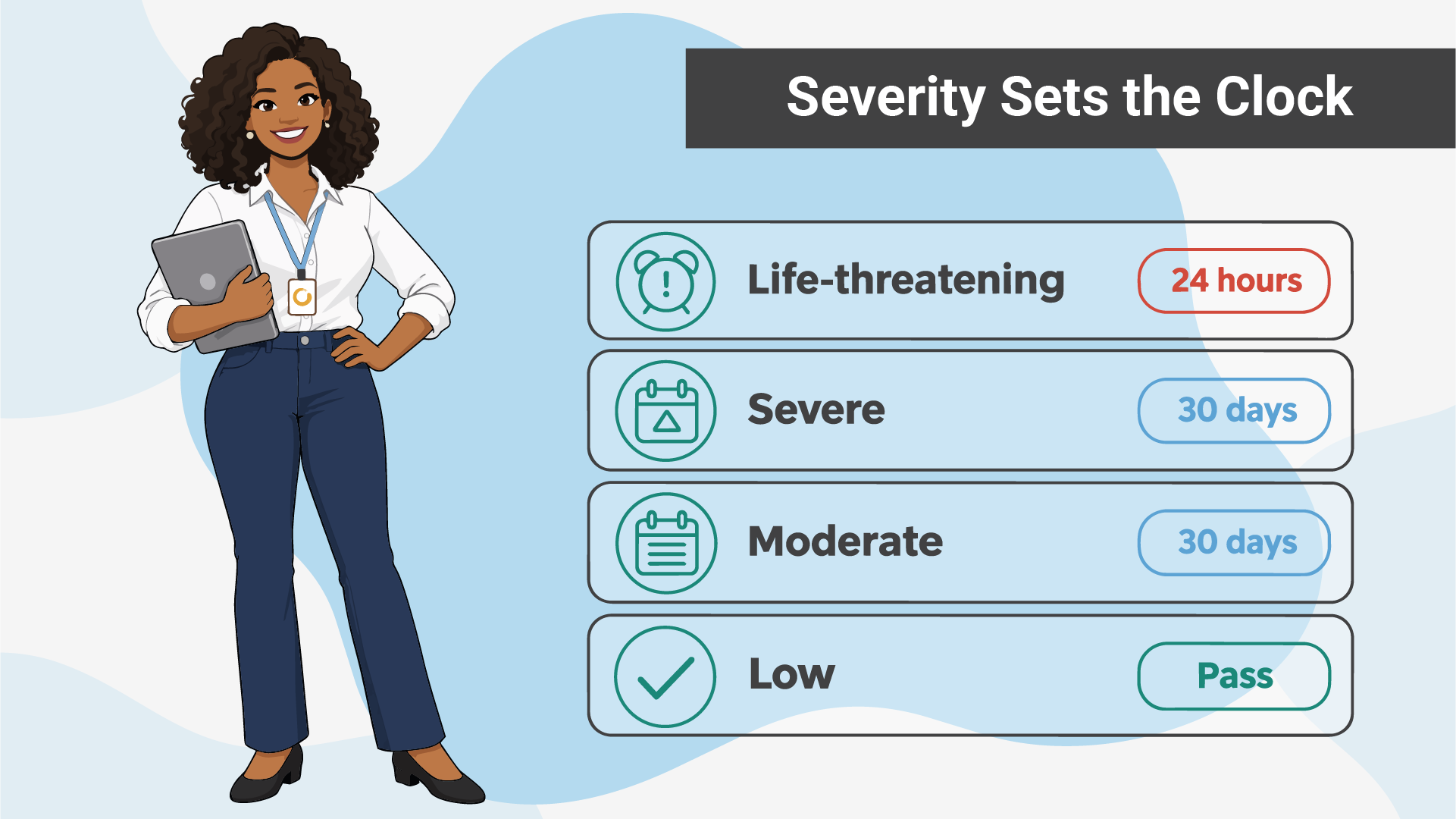
Under HQS, a deficiency failed the unit. The owner had 24 hours to fix a life-threatening one and 30 days to fix anything else. NSPIRE-V keeps those clocks but sorts every deficiency into four severity levels, and the lowest level doesn't fail the unit at all:
Life-threatening: corrected within 24 hours of notice. The unit fails.
Severe: corrected within 30 days, or a PHA-approved extension. The unit fails.
Moderate: corrected within 30 days, or a PHA-approved extension. The unit fails.
Low: noted by the inspector. The unit passes.
Voucher inspections are still not numerically scored. But once your agency switches, forms HUD-52580 and HUD-52580-A must not be used.
What isn't changing: carbon monoxide alarms (inspectable since December 27, 2022) and hardwired or sealed 10-year smoke alarms (required since December 29, 2024) apply under either standard. If your current HQS form doesn't reflect them, it's already out of date.
Four places NSPIRE-V draws a hard line
NSPIRE-V spells out exactly what fails. Start retraining your inspectors on these four items.
Ground-fault circuit interrupter (GFCI) protection near water. Federal rules at 24 CFR 5.703 require GFCI protection for any outlet within six feet of a water source. An unprotected outlet is a severe deficiency.
Heat, by the numbers. From October 1 through March 31, a permanent heat source that isn't working, or a unit below 64°F, is life-threatening. A working system that only reaches 64 to 67.9°F is severe. Outside that window, a damaged or missing permanent heat source is moderate.
Dryer ducts. A transition duct that is detached, missing, or made of unsuitable material is life-threatening, with a 24-hour fix.
Mold-like substances. HUD grades mold by how much is visible. A moderate amount inside the unit is a moderate deficiency, and the unit fails. An elevated moisture level is moderate too.
What no longer fails
HUD's notice says NSPIRE standards "remove subjective opinions about general health and safety, housekeeping, and cosmetics/aesthetics of a unit and property." In practice:
Subjective calls about how a unit looks are out. That includes housekeeping and cosmetic judgments.
Low deficiencies pass. A damaged sink component passes when the sink still works. So does a damaged entry door component, as long as the door still provides privacy and protection from weather and pests.
Site and neighborhood are gone from unit inspections. They still apply to PBV site selection.
The net effect: less time on appearance and more time on health and safety.
What changes on inspection day
The clocks aren't new, but the list that starts them is. NSPIRE-V's standards spell out which conditions are life-threatening, and that list includes items such as a detached dryer duct or a missing smoke alarm.
Picture an inspector who finds a detached dryer duct on a Tuesday morning. Once the owner is notified, they have 24 hours to fix it. Your notices, follow-up calls, and reinspection scheduling need to keep pace.
If a deficiency isn't corrected on time, the PHA must start housing assistance payments (HAP) contract enforcement. For contracts entered into or extended after June 6, 2024, the Housing Opportunity Through Modernization Act (HOTMA) makes certain remedies mandatory.
The takeaway: walk owners through the new standards before your transition date, not at their first failed inspection.
Before February 1: your agency checklist
The unit checklist is only half the work. Before your transition date:
Confirm your transition date with HUD. HUD asked for the email by September 30, 2026, and it still accepts updates and confirmations after that date.
Choose your inspection tool. HUD has paused building its own software, but it publishes a free NSPIRE HCV/PBV Inspection Checklist in PDF, fillable PDF, and Excel formats.
Re-review your variations. If a previously approved variation is still needed, submit a new request. It can't be used until HUD approves it.
Update your Administrative Plan with your inspection standards and procedures. If the change counts as a significant amendment, amend your PHA Plan too.
Train inspectors and notify every owner and family about what NSPIRE is and when it takes effect for their inspections.
Make the switch in one place
Kanso runs NSPIRE-V inspections today. See how inspections fit alongside the rest of your HUD compliance software, so your team works from one set of rules on day one.
Frequently asked questions
-
No later than February 1, 2027, for the HCV, PBV, and Moderate Rehabilitation programs. Agencies can switch earlier, and HUD encourages it.
-
Only until your agency implements NSPIRE or until February 1, 2027, whichever comes first. After that, forms HUD-52580 and HUD-52580-A must not be used.
-
DescYes. HUD publishes the NSPIRE HCV/PBV Inspection Checklist on its NSPIRE page as a PDF, a fillable PDF, and an Excel tool. HUD notes that the checklist doesn't cover special housing types.ription text goes here
-
No. The inspector notes low deficiencies, but the unit still passes. Life-threatening, severe, and moderate deficiencies all fail the unit.
-
No. Both already apply whether your agency uses NSPIRE or HQS. Carbon monoxide alarms became inspectable on December 27, 2022, and the hardwired or sealed 10-year smoke alarm requirement took effect on December 29, 2024.
-
Not automatically. Your agency must decide whether each variation is still needed. If it is, submit a new request to HUD. You can't use it until HUD approves it.
This post is general information and does not replace HUD regulations, notices, or guidance. Confirm requirements against the current HUD notice before acting.
