
Public Housing Software for Executive Directors: What PHA Leaders Should Look For
What should an executive director look for in housing authority software?
Housing authority software for executive directors should give a leader one trusted view of compliance, finances, and operations. It should keep the authority audit-ready with HUD, turn data into board-ready answers without waiting on staff, and help a lean team do more. The test is simple: can you see how your authority is doing today without asking someone to build a spreadsheet?
What an executive director is really accountable for
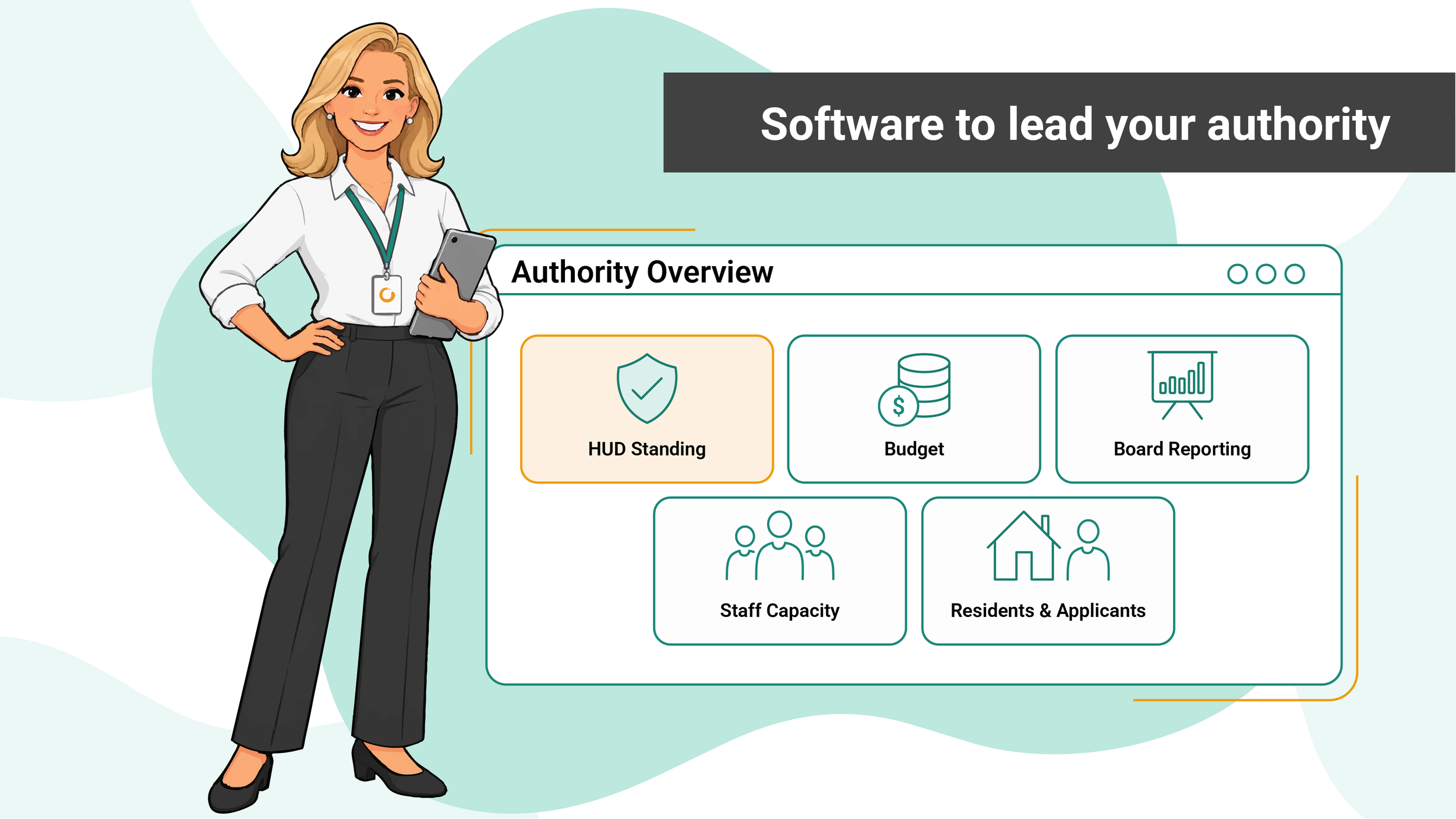
Staff use the housing software to do the work. An executive director uses it to see the work. That view matters because the director answers for the whole authority, and most of what they answer for lives in the system:
HUD standing: PHAS scores for public housing and SEMAP ratings for the Housing Choice Voucher program, or HUD's small rural assessment for qualifying authorities.
The budget: Rent, program funds, and how every transaction reaches the general ledger.
The board: Commissioners who expect clear, regular reporting.
Staff capacity: Small teams carrying heavy compliance work.
Residents and applicants: Units filled, repairs done, and households served.
When those five live in one system, a leader can manage them. When they live in separate tools and spreadsheets, a leader spends the week chasing them down.
Six things PHA leaders should look for
1. Audit readiness you do not have to double-check
The Form HUD-50058 is the backbone of your tenant reporting to HUD, and errors in it are costly. Look for software that generates the 50058 and scans it for errors, flagging where data is off before a submission goes out. The strongest vendors add a human backstop too, with compliance specialists who review PIC/IMS submissions. For a director, that means fewer surprises and more confidence when you sign off. Physical condition, now inspected under NSPIRE, carries the most weight in a PHAS score, so look for inspections and work orders tied to each unit's history as well.
2. Answers on demand
Directors get asked questions that no one planned for. Good software handles the common ones with prebuilt reports, such as current and historical unit vacancies, in a couple of clicks. Occupancy is part of your PHAS score, so a quick view of vacancies is more than a convenience. For everything else, look for a build-your-own analysis tool that lets staff filter, group, sort, and export to .CSV. Getting the number you need should take minutes, not days.
3. A clear financial picture
Subsidized housing transactions are messy. Look for tenant ledgers that keep rent, utilities, deposits, and repayment agreements in one place, with payments allocated across them by a set priority. That keeps tenant accounts receivable, another measure in your PHAS score, visible at a glance. Then look at how that money reaches accounting. A one-click export to your general ledger as a subledger removes the download-and-re-upload routine and gives finance totals it can trust.
4. More capacity from the team you have
Most authorities cannot hire their way out of their workload. Software should multiply what each person can do. Bulk actions are the clearest example: one interim certification can generate every document, report, and letter it requires at once, and mass letters can go to a whole group in a single step. A consistent, intuitive interface matters just as much, because it shortens training and keeps turnover from stalling the work.
5. Work from anywhere, with no server to maintain
A true cloud platform lets staff log in securely from the office, from home, or on a site visit, with no aging office server to patch and back up. For a director, that means less IT risk and cost, and continuity when people work remotely, or the office is closed. It is worth asking whether a product is true cloud or older server software hosted somewhere else.
6. Built for HUD programs, not borrowed from property management
General property management software is built for market-rate rentals. A housing authority runs federal programs with rules a market-rate tool does not know. Purpose-built software models households and units as separate but linked records, so rent calculates correctly, and it handles 50058s, vouchers, and preference rules as a matter of course. Our complete guide to public housing authority software covers this difference for the category as a whole.
What board reporting should look like
The monthly board packet is where many directors feel the pain of disconnected tools. Staff spend days pulling numbers from separate systems, and the numbers do not always agree.
When occupancy, vacancies, finances, and program data share one system of record, the packet gets easier. Build a report once, export it, and run it again next month with fresh data. Commissioners get consistent numbers, and staff get their days back.
Questions to ask in a demo
A demo is the best place to test these points. Bring this list:
Show me how you catch a 50058 error before it goes to HUD.
Can I answer a new question myself, without requesting a custom report?
How do our transactions reach the general ledger?
How long does it take to train a new hire?
Is this true cloud, or server software hosted elsewhere?
Was this built for HUD programs, or adapted from property management?
The bottom line for PHA leaders
The right software gives a director three things: visibility into the whole authority, confidence at audit time, and a team that can do more with the same hours. See what purpose-built looks like on Kanso's public and affordable housing platform, and when you are ready, schedule a demo to judge the fit for your authority.
Frequently Asked Questions (FAQs)
-
Look for audit-ready HUD reporting, answers on demand, a clear financial picture, tools that expand staff capacity, true cloud access, and support built for HUD programs. Together, these give a leader one trusted view of the authority.
-
It supports the data behind them. Software that generates the 50058, scans it for errors, and produces compliance reporting helps an authority submit accurate information and show its work.
-
Yes. Look for prebuilt reports for common questions plus a self-serve analysis tool with CSV export, so staff can build a board report once and rerun it each month.
-
Usually not. General property management tools built for market-rate rentals do not model HUD programs, the 50058, vouchers, or waiting-list preference rules the way purpose-built PHA software does.
